

one bedroom, three kids.
dispatches from a room in tween-sition.

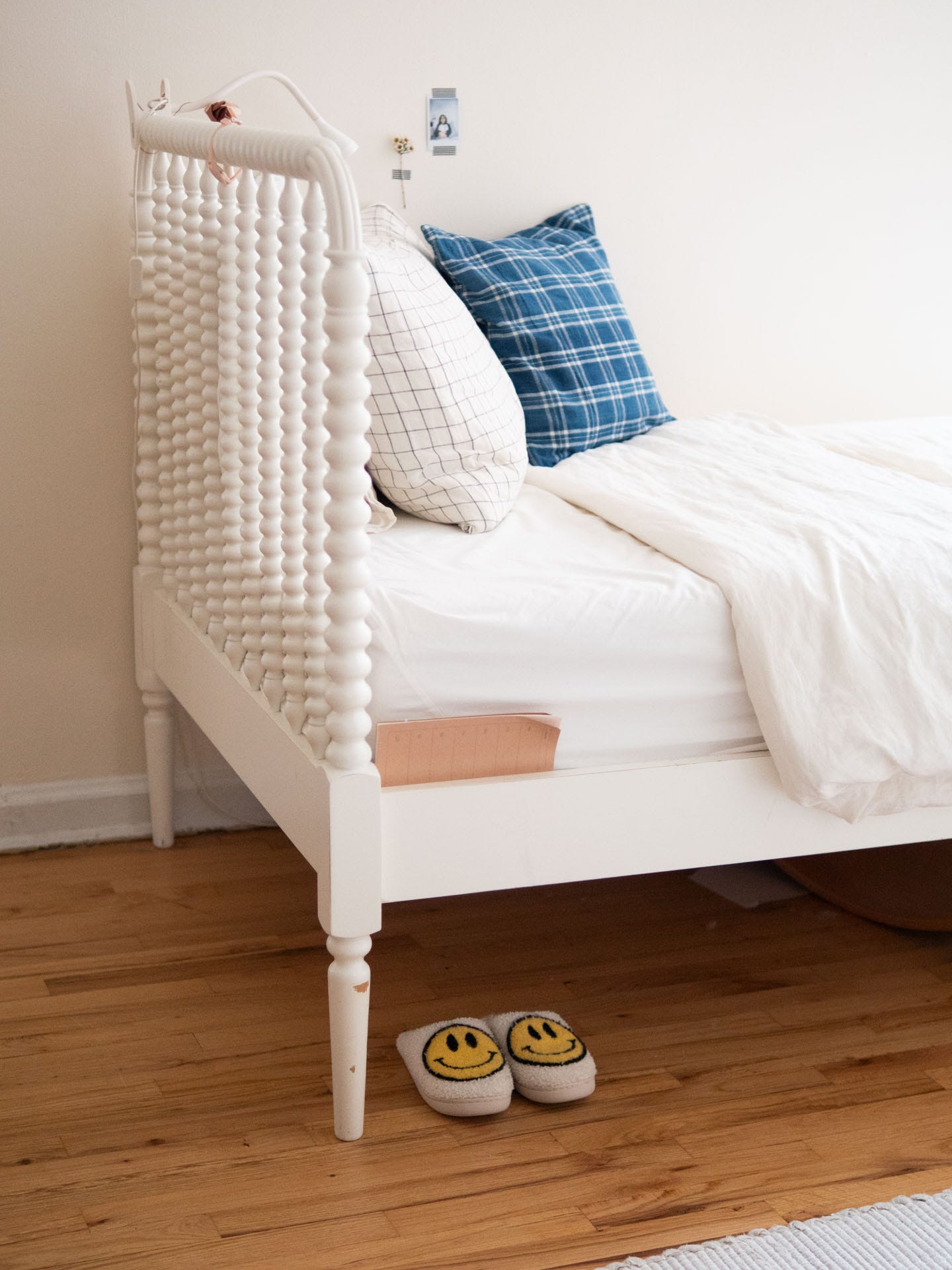
Last spring, when our family learned that our landlord was selling our building and that we’d need to move by mid-summer, we incorrectly assumed that an apartment search in our neighborhood would be difficult, but still possible. For months we searched hopefully for an apartment comparable to the one we’d need to leave behind. We figured we’d find one eventually—the neighborhood is filled with buildings with layouts nearly identical to the one where we lived. Surely we’d be able to make it work. Unfortunately hopefulness is not something that the New York City rental market particularly responds to.
It wasn’t only that the inventory was shockingly low, or that the rents had more than doubled in five years, but also that so many of the apartments themselves had been changed. When neighborhood townhouses weren’t being bought and turned into single-family mansions for the extremely wealthy, it seemed they were being bought and remodeled into upscale apartments for the merely very wealthy. We regularly saw listings for apartments that could have once fit a family of five, transformed into spaces that no longer made sense for families at all. Disproportionately large gourmet kitchens were taking up the space formerly occupied by two different rooms. Flexible living space was getting eclipsed in favor of prioritizing features like large closets with a washer and dryer, and hallways, and second bathrooms. Even if we could have afforded the astronomical rents, these apartments had been reconfigured to serve young professional couples, not families, and definitely not families with three growing kids.
When we found unrenovated apartments, with layouts still like ours, our applications weren’t even considered. Once, a landlord posted a listing on a neighborhood Facebook group and my phone lit up with messages from close friends alerting me. One of them had already gotten me the number of the landlord and she urged me to text her directly. When I did, I explained that we currently lived in a very similar apartment just a few blocks away. She asked me if I had kids. Stunned by her brazenness I told her yes and she decided for me that the apartment wouldn’t work.
“Sorry, but the apartment is not big enough for a family of five.”
I pressed her, explaining that we’d been in an apartment of an identical size and almost exactly the same layout for the last five years. We’d managed just fine! I told her I’d love the chance to see the apartment for myself and decide if it could work. I counted on the fact that my pressing her would remind her that she couldn’t legally deny me the opportunity.
She replied immediately with a response she must have been crafting while I’d been typing: “I already have six people interested…and I think it’s too much to have five people in the apartment. Good luck!”
Housing discrimination be damned.
Where we ended up, three miles and a small world away, the mid-century low-rise building was built with working and middle-class and families in mind. Eighty years later, it remains that way, a building where, for the time being anyway, families like ours can still make a home. In lots of ways, the design of this new apartment is an improvement over our last one and living here has been a relief and a godsend. James and I have a proper bedroom to call our own. No one is required to tromp tip-toe next to our bed to get to the bathroom or the kitchen in the middle of the night. One of our bedroom doors does open unconventionally directly into the kitchen, but it’s a design feature created with maximum efficiency in mind—more airflow, fewer hallways, and space enough for a family—not maximum luxury. Luxury for us, after all, is a bedroom no one needs to walk through. Our kids are happy to have a space large enough for all three of them with some room to spar spare. Well, mostly they’re happy. Even after moving many neighborhoods away, what we could reasonably afford—and what was available—was still a modest two-bedroom. Lately there have been feelings.